
[wpsm_toplist]
At the Gas Care by Stove-Technica testing facility in Thrissur, we are actively tracking the shift from traditional gas combustion to electromagnetic induction in premium modular kitchens. For urban apartments with limited countertop real estate, or for homeowners seeking a secondary high-speed cooking station, the 30cm “Domino” form factor is the ultimate architectural solution.
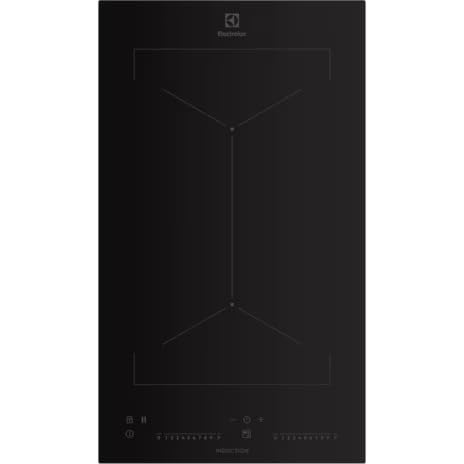
Electrolux UltimateTaste 500 Review (EHI3251BE): The 30cm Domino Audit

Electrolux 30cm UltimateTaste 500 2-burner built-in induction hob (EHI3251BE,Black)
 Amazon.in
 - Select the bridge function to combine two zones.
- PowerBoost provides quick, intense heat.
- Induction is safe, fast, and energy efficient.
- Combine zones for more flavour:-The Bridge function allows you to combine two separate cooking zones to create a single large surface. With the temperature and time settings automatically aligned, it's ideal for making the most of planchas or roasting pots.
- Sear. Stir-fry. :-Boil.Induction technology only heats the area directly beneath the pan, while the surface area around it remains cool. This means that induction hobs are safer and easier to clean than traditional cooktops, as spillages don't burn on. Induction is also faster and more energy efficient, so you can create delicious dishes in less time with less energy.
- Place pot, activate controls:-Let the hob adapt your cooking style, not the other way around. Sensors automatically detect where you place pots on the cooking surface and illuminate the controls, making it easy for you to control each specific area.
- No risk of outages:-In order to prevent electrical outages, the Power management function automatically redistributes the electrical load between cooking zones if it is close to exceeding the limit.
Domino Architecture & Electromagnetic Thermodynamics
Enter the Electrolux UltimateTaste 500 (EHI3251BE). Retailing in the premium ₹34,000 to ₹41,000 bracket, this 2-burner built-in induction hob promises rapid 3700W heating, intelligent load management, and Swedish design aesthetics. But how does its passive-cooled internal circuitry handle the intense, heavy-duty demands of South Indian cooking? In first part of this exhaustive 2026 engineering audit, we strip away the Schott Ceran-style glass, dissect the “Bridge Function” electromagnetics, and evaluate the critical installation infrastructure required to keep this appliance alive.
1. Physical Architecture: The 30cm Domino Footprint
When engineering a compact kitchen or a kitchen island, space is the ultimate luxury. The Electrolux EHI3251BE utilizes the “Domino” layout—a slim, vertical, 30cm wide configuration that maximizes lateral prep space on your granite slab.
The Glass Substrate & Cutout Reality
The hob is capped with a sleek, flat black ceramic glass surface.
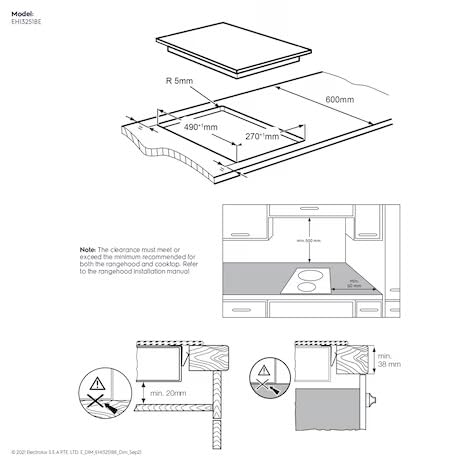
- The Dimension Discrepancy: This is the number one installation error we see in the field. The Outer Dimensions of the glass are 300 mm (W) x 520 mm (D). However, the Cutout Dimensions required for your granite countertop are strictly 270 mm (W) x 490 mm (D). The Gas Care Warning: Do not allow your stone mason to cut the granite based on the spec sheet alone. Wait until the physical unit is in your hands to account for millimeter-level manufacturing tolerances.
- The Flush Aesthetic: Because the control interface is entirely touch-sensitive and printed directly onto the glass, there are no protruding knobs. This creates a seamless “appliance-in-counter” look, making it incredibly easy to wipe clean after a messy curry spill.
The Internal Teardown: Passive Cooling & PCBs
Removing the glass reveals a highly organized, dense internal architecture.
- Unlike cheaper portable induction cooktops that rely on noisy, high-RPM cooling fans, this Electrolux built-in model relies heavily on passive cooling (natural convection) combined with a small aluminum heatsink clamped to the internal IGBTs (Insulated-Gate Bipolar Transistors).
- The Ventilation Mandate: Because cooling is largely passive, the cabinet architecture beneath the hob is critical. You must leave a minimum 50mm vertical clearance below the chassis and ensure the front of the cabinet allows hot air to escape. If you suffocate the appliance, the internal NTC thermistors will detect the heat buildup and instantly shut the unit down (triggering an
E1orE3thermal error) to prevent the motherboard from frying.
The Architect’s Blueprint: 3 Ways to Integrate a 30cm Domino Hob
The 30cm “Domino” form factor of the EHI3251BE is a highly specific architectural tool. It is not just for tiny kitchens; it is designed for modular flexibility. Here is how premium interior designers are deploying this appliance:
- The “Hybrid” Kitchen Setup: The most popular layout in modern Kerala homes is placing this 30cm Electrolux induction hob side-by-side with a 60cm or 75cm built-in brass gas hob (like the Faber HT703). This gives you the ultimate hybrid kitchen: you use the induction for rapid boiling and precision simmering, and the gas hob for traditional flame-roasting (Phulkas) or using round-bottomed clay pots.
- The Kitchen Island Station: If you have an open-plan kitchen with a central island, a massive 90cm chimney and hob can obstruct sightlines into the living room. Dropping this slim 30cm Domino hob into the island creates a sleek, secondary prep station perfect for making breakfast omelets or keeping gravies warm while entertaining guests, without dominating the aesthetic.
- The Compact Studio Solution: For premium urban apartments or pantry kitchens where countertop space is measured in inches, turning the hob vertically (Domino style) leaves you with maximum lateral granite space for chopping boards and appliance parking.
Electromagnetic Thermodynamics: The “Bridge” Advantage
The defining feature of the Electrolux EHI3251BE—and the primary justification for its premium price tag over budget ₹20,000 competitors—is its coil synchronization technology.
The 2-Zone Configuration & Pot Detection
Underneath the glass lie two flat, spiral-wound copper induction coils.
- Intelligent Sensors: The MCU (Microcontroller Unit) features active pot detection. If you place an induction-compatible (magnetic) pot on the glass, the LC-oscillator circuit instantly detects the ferromagnetic load and illuminates the specific touch controls for that zone. If you remove the pan, the energy transfer stops immediately, making it vastly safer than an open gas flame.
The “Bridge Function”
Standard 2-zone hobs force you to use two small, round pots. For Indian cooking, this is a severe limitation if you want to use a massive rectangular Tawa or griddle for continuous Dosa making.
- Electrolux solves this with the Bridge Function. By pressing the Bridge symbol on the glass, the digital logic board electronically links the two separate 1.8 kW coils.
- They now function as one massive, continuous electromagnetic surface, controlled by a single temperature slider. This ensures perfect, synchronized heat across a large roasting pan or cast-iron plancha, completely eliminating cold spots in the middle of the pan.
Power Density: The 3700W Load & Power Management
Generating intense electromagnetic fields requires serious electrical infrastructure. This is not a plug-and-play appliance.
The 16A Infrastructure Requirement
The unit possesses a total connected load of 3.7 kW (3700 Watts).
- The Gas Care Rule: This appliance cannot be plugged into a standard 5A/6A kitchen socket. It requires a dedicated, heavy-duty 15A or 16A power point wired directly back to your main distribution board. If you are replacing an old gas stove, you will likely need to hire an electrician to pull a new, thick-gauge wire to prevent your kitchen’s circuit breaker from constantly tripping.
PowerBoost & Intelligent Load Balancing
- The PowerBoost Surge: When boiling a large pot of water or searing meat, you can engage the PowerBoost function. The inverter pushes a massive surge of energy (up to ~2.8 kW) into a single zone for up to 10 minutes, cutting boiling times by up to 75% compared to standard gas.
- The MCU Power Manager: Because the total limit is 3.7 kW, you cannot run both zones on PowerBoost simultaneously. To prevent a catastrophic electrical outage, the internal Power Management firmware automatically redistributes the electrical load. If you boost Zone 1, the MCU will intelligently and automatically reduce the power available to Zone 2, keeping the total draw safely under the 16A threshold.
The Economics of 3700W: Will It Spike Your Electricity Bill?
When buyers see the 3700W power rating on the Electrolux UltimateTaste 500, a common fear is that it will severely inflate their monthly electricity bill (a valid concern with rising KSEB tariffs). However, analyzing the thermodynamics reveals a different reality.
- The Efficiency Math: Traditional LPG gas stoves are only about 40% efficient; 60% of the heat escapes around the sides of the pan into the air. Induction technology is 85% to 90% efficient. The electromagnetic energy is transferred directly into the metal of the pot with almost zero ambient heat loss.
- The Boiling Test: Boiling 2 liters of water on a 2.5kW gas burner takes roughly 8 to 10 minutes. Using the Electrolux PowerBoost function, that same 2 liters boils in under 4 minutes.
- The Financial Verdict: If you use this hob for 1 hour of active, high-heat cooking every single day, it will consume approximately 1.5 to 2.0 kWh (units) per day. At an average KSEB tariff of ₹7 per unit, that equals ₹10 to ₹14 daily, or roughly ₹300 to ₹400 per month. When compared to the cost of a non-subsidized LPG cylinder (which lasts roughly 30 to 40 days for a family of four), running this high-powered induction hob is actually cheaper or directly on par with gas, while keeping your kitchen significantly cooler.
Digital Logic, Error Diagnostics & The Market Showdown
Continuing our rigorous engineering teardown review, we move beyond the Electrolux UltimateTaste 500’s raw 3700W power and electromagnetic coil architecture. A premium induction hob is essentially a high-heat computer. If you do not understand its digital logic, safety interlocks, and error codes, a minor voltage fluctuation can lock you out of your own kitchen. Now, we decode the touch UI, outline the strict glass maintenance protocol, and place this Swedish-designed unit head-to-head against its German rival, Bosch.
Digital Logic: Touch UI & Safety Interlocks
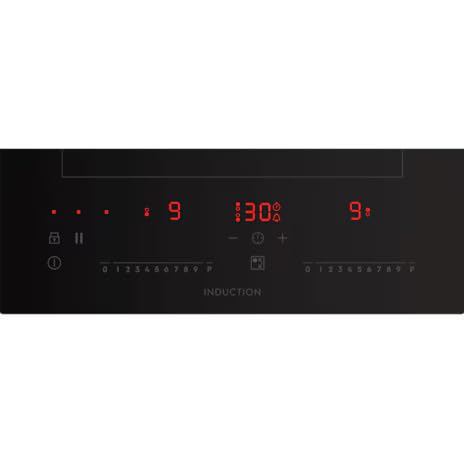
The Electrolux EHI3251BE completely eliminates physical rotary knobs, relying on a printed capacitive membrane beneath the glass. This digital interface is heavily governed by an internal microcontroller (MCU) focused on safety and efficiency.
The 9-Level Heat Calibration
- Levels 1–3: Engineered for ultra-low frequency pulsing. This keeps the pan just warm enough to melt chocolate or butter without splitting it.
- Levels 4–6: The sweet spot for standard simmering or steaming.
- Levels 7–9: Constant, high-frequency energy transfer for rapid boiling, deep frying, or aggressive sautéing.
- The “H” Indicator (Residual Heat): Induction coils do not generate heat themselves; the pan generates the heat, which transfers back to the glass. When you remove a pan, the display flashes “H”. This is a safety feature warning you that the glass is still dangerously hot. The Gas Care Hack: Turn the hob off 3 minutes before your curry is done; the residual heat trapped in the heavy pan and glass will finish the cooking process for free, saving electricity.
The Safety Overrides
- The “L” Lock: A software child-lock that disables the touch sensors. Press and hold the lock symbol for 3 to 5 seconds to bypass it.
- Boil-Dry Protection: If a pan boils completely dry, the temperature of the glass spikes uncontrollably. The internal thermistor will detect this anomaly and automatically shut the zone off to prevent a fire or the glass from shattering.
The Gas Care Diagnostic Protocol: Decoding E-Codes
When the MCU detects an electrical or thermal fault, it freezes the appliance to protect the delicate internal circuitry (specifically the IGBTs) and flashes an error code. Here is how to diagnose them in the field.
- Code E0 (or Flashing Pan Symbol): The LC-oscillator cannot detect a magnetic load. You either removed the pan, placed it too far off-center, or you are trying to use an incompatible aluminum, copper, or clay pot.
- Code E3 / E4 (Voltage Instability): A highly common code in Kerala due to KSEB grid fluctuations. The internal sensors have detected voltage dropping too low or spiking too high. The hob protects itself by shutting down. Wait for the grid to stabilize or install a dedicated voltage stabilizer for the kitchen circuit.
- Code E6 / E8 / E9 (Hardware & PCB Failure): These are critical hardware faults. E6 often points to an internal sensor glitch (fixable by shutting off the main kitchen breaker for 60 seconds to perform a “Hard Reset”). E8 (communication error) and E9 (main control board fault) usually indicate a blown IGBT or a fried motherboard. Do not attempt to open the chassis; these require an Electrolux Authorized Technician to execute a full PCB swap under the 2-year warranty.
The Ceramic Glass Maintenance Protocol
The high-quality Schott Ceran-style glass is incredibly durable against blunt force, but it is highly susceptible to microscopic scratches and chemical etching. To preserve the 5-Year Glass Warranty, you must follow these strict rules.
- The Sugar Catastrophe: If you spill boiling sugar syrup, jam, or melted plastic onto the hot glass, clean it immediately with a dedicated razor-blade scraper at a 45-degree angle. If sugar cools and hardens on the ceramic glass, it molecularly bonds to it. When it contracts, it will literally pull small “pits” or chips right out of the glass surface.
- Never Slide Cookware: If there is a single grain of salt or sand under your heavy cast-iron pan and you slide the pan across the hob, it will carve a permanent “metal mark” into the glass. Always lift the pot to move it.
- Ban the Steel Wool: Never use abrasive scouring pads, steel wool, or harsh acidic powders. Clean the hob only after the “H” disappears, using a damp microfiber cloth and a mild ceramic hob cleaner.
The Gas Care Cookware Mandate: Unlocking the Bridge Function
Buying the Electrolux EHI3251BE without utilizing the Bridge Function is a waste of its premium engineering. To truly unlock this appliance, you must upgrade your cookware. Standard round pans do not take advantage of the linked electromagnetic zones.
The Ultimate Pairing: The Cast Iron Plancha / Griddle To maximize the Bridge Function, you need a heavy, rectangular Cast Iron Plancha or Reversible Griddle (approximately 45cm to 50cm in length).
- How it Works: You place the long griddle vertically across both zones and activate the Bridge button. The MCU synchronizes the two 1.8kW coils, turning the entire cast iron slab into a unified, searing-hot cooking surface.
- The Culinary Advantage: This setup is the holy grail for South Indian breakfasts. It allows you to pour and spread two massive, restaurant-style crispy Dosas simultaneously, or quickly sear large batches of marinated fish without crowding the pan and dropping the temperature.
- Pro Tip: Ensure the bottom of the cast iron griddle is completely flat and enamel-coated if possible, to prevent the rough raw iron from scratching the Schott Ceran glass during cooking.
The Sub-₹45,000 Market Showdown: Electrolux vs. Bosch vs. Hafele
The 30cm “Domino” category is fiercely competitive. If you have ₹35,000 to ₹45,000 to spend on a built-in induction hob, how does the Electrolux stack up against its primary German-engineered rivals?
| Engineering Metric | Electrolux EHI3251BE | Bosch Series 6 (PIB375FB1E) | Hafele Nero 30 | Glen (BH1015IC2Z) |
| Approx. Street Price | ₹34,199 – ₹41,990 | ₹41,690 – ₹45,490 | ₹33,390 – ₹35,200 | ~₹21,000 (Budget) |
| Total Max Power | 3.7 kW | 3.7 kW | ~3.5 kW | ~3.0 kW |
| Power Levels | 9 Levels | 17 Levels | 9 Levels | 9 Levels |
| Bridge Function | Yes (Combines Zones) | No (Strictly Independent) | No | No |
| Warranty | 2 Yrs + 5 Yrs (Glass) | 2 Years | 1 to 2 Years | 1 Year |
The Tactical Breakdown
- The Precision Rival (Bosch PIB375FB1E): Bosch commands the highest price tag, and for that, you get 17 distinct power levels. If you are a culinary perfectionist making delicate sauces, Bosch offers superior micro-adjustments. However, it completely lacks the “Bridge Function.” You cannot combine its zones for a massive griddle.
- The Designer Rival (Hafele Nero 30): Hafele relies heavily on its sleek, minimalist aesthetic. While beautiful and slightly cheaper than Electrolux, it lacks the raw engineering firepower of PowerBoost and the utility of the Bridge zone.
- The Budget Alternative (Glen BH1015IC2Z): At roughly ₹21,000, Glen offers the built-in look for half the price. However, you sacrifice total wattage (slower boiling), advanced safety features, and the premium glass durability found in the Electrolux.
The Showdown Verdict
The Electrolux UltimateTaste 500 wins this showdown strictly on the utility of the Bridge Function. For the Indian kitchen, where a long, rectangular Tawa for making multiple Dosas simultaneously is highly desired, the ability to merge two independent electromagnetic zones into one unified surface makes it significantly more practical than the rigid independence of the Bosch or Hafele models.
In this final phase of our comprehensive engineering audit, we distill the technical data of the Electrolux UltimateTaste 500 (EHI3251BE) into a definitive purchasing decision. For the modern Kerala homeowner designing a modular kitchen or a compact apartment, integrating a 3700W induction hob is a serious architectural commitment. Here is the definitive Stove-Technica scorecard and our final verdict.
The Gas Care Pros, Cons & Final Scorecard
To conclude our Thrissur lab testing, the Electrolux 30cm UltimateTaste 500 is an exceptionally smart, space-saving culinary engine. It rejects the limitations of traditional 2-zone hobs by integrating bridge logic, making it highly adaptable for Indian cooking styles.
Here is our unfiltered breakdown of its engineering triumphs and infrastructure limitations.
The Pros (The Engineering Triumphs)
- The Bridge Function Synergy: This is the ultimate differentiator. The ability to electronically link the two 1.8kW coils into one massive, continuous heating surface allows you to use oversized rectangular Tawas or heavy cast-iron griddles. It is perfect for making multiple Dosas simultaneously without cold spots.
- 3700W PowerBoost: The sheer speed of the 3.7kW electromagnetic inverter is staggering. Engaging PowerBoost boils large pots of water or brings oil to searing temperatures up to 75% faster than a conventional gas burner.
- Intelligent Load Balancing: The internal MCU automatically redistributes the electrical load when using both zones at high capacity, preventing the appliance from tripping your kitchen’s main circuit breaker.
- The 5-Year Glass Warranty: Electrolux’s confidence in their Schott Ceran-style ceramic glass gives massive peace of mind. While it doesn’t cover drop impacts, 5 years of coverage on a high-heat glass surface is excellent value.
The Cons (The Operational Realities)
- Strict 16A Infrastructure Demand: Drawing 3700 Watts means this unit cannot be plugged into a standard 5A/6A socket. It strictly requires a dedicated 15A/16A heavy-duty circuit. If you are retrofitting an older kitchen, you will have to pay an electrician to pull new wiring.
- Granite Cutting Precision: The Domino form factor is unforgiving. If your stone cutter makes the cutout even 5mm too wide, the appliance will lack structural lip support, putting immense stress on the glass edges.
- Limited to 9 Power Levels: While sufficient for daily cooking, it lacks the hyper-precision of the 17 power levels found on its direct rival, the Bosch Series 6, which might frustrate professional-level pastry chefs.
- Ventilation Dependence: Because cooling is entirely passive, if your carpenter does not leave a 50mm air gap inside the cabinet below, the hob will repeatedly overheat and trigger automatic shutdowns.
The Stove-Technica Scorecard
- Performance & Speed: 9.5 / 10 (The PowerBoost function and induction efficiency are unmatched for rapid boiling and searing.)
- Design & Innovation: 9.5 / 10 (The Bridge function fundamentally solves the issue of small induction zones for large Indian cookware.)
- Features & Digital Logic: 8.5 / 10 (Excellent load management and safety cut-offs, though we wish it had more than 9 micro-adjustments.)
- Value & Installation: 8.0 / 10 (A premium price tag requiring professional installation and specific wiring, but the 5-year glass warranty adds massive long-term value.)
Overall Gas Care Rating: 8.8 / 10
The Final Conclusion & Verdict
The Electrolux UltimateTaste 500 (EHI3251BE) Built-in Induction Hob is a brilliant architectural solution for compact kitchens or luxury kitchen islands. By including the Bridge Function, Electrolux has engineered a Domino hob that can handle the reality of large Indian cookware without compromising its sleek, space-saving footprint.
Buy it if: You are building a modern modular kitchen, you frequently use large rectangular Tawas or griddles that require an extended heating zone, and you have a dedicated 16A power line ready for connection.
Skip it if: You are renting and cannot cut your countertop, your kitchen suffers from constant extreme voltage fluctuations (which will trigger E3 errors), or your existing cookware consists entirely of aluminum, copper, or clay pots (which will not work on induction).
The Gas Care Comprehensive FAQ: Electrolux UltimateTaste 500 (EHI3251BE)
At our Stove-Technica service desk in Thrissur, the shift from traditional gas to built-in induction brings a completely new set of technical questions. Operating a 3700W digital induction hob requires an understanding of electromagnetics, precise electrical wiring, and strict glass care.
To help you protect your investment and navigate the digital interface, we have compiled this exhaustive, categorized FAQ based on our field diagnostics.
1. Installation & Electrical Infrastructure
Q: Can I just plug this hob into the standard socket where my mixer grinder goes?
A: Absolutely not. The Electrolux EHI3251BE has a massive total connected load of 3700 Watts (3.7 kW). Standard kitchen sockets in India are rated for 5A or 6A and will instantly melt under this load, posing a severe fire hazard. You must wire this appliance to a dedicated 15A or 16A heavy-duty circuit (similar to what you use for a 1.5-ton AC or a heavy geyser), connected to a dedicated MCB in your distribution board.
Q: My granite cutter wants the dimensions before the hob arrives. What size should the hole be?
A: Tell your cutter to wait. The most common installation disaster is cutting the granite too wide. The Product Dimensions are 300 mm x 520 mm, but the actual Cutout Dimensions required for the chassis to drop into the counter are strictly 270 mm x 490 mm. We strongly advise physically having the unit on-site before cutting to account for minor manufacturing tolerances.
Q: Do I really need to leave empty space underneath the hob inside my cabinet?
A: Yes, ventilation is non-negotiable. This induction hob uses a combination of internal fans and passive aluminum heatsinks to cool the massive 3.7kW inverter board. You must leave a minimum vertical clearance of 50mm beneath the chassis. If you cram pots and pans directly underneath it and suffocate the airflow, the hob will overheat and trigger an automatic shutdown to prevent the motherboard from frying.
2. Cookware & The Bridge Function
Q: Will my heavy cast-iron Cheenachatty work on this induction hob?
A: Yes, cast iron is highly ferromagnetic and works brilliantly on induction. However, because a traditional Cheenachatty has a curved, round bottom, the flat induction sensors may struggle to detect it efficiently. Induction hobs operate best with flat-bottomed cookware.
Q: I tried to boil water in an aluminum pot, but the hob just flashed and beeped. Why?
A: Induction technology utilizes electromagnetism, not radiant heat. It only works with magnetic metals. Aluminum, pure copper, glass, and clay pots will not interact with the magnetic field. The Gas Care Magnet Test: Take a standard fridge magnet and hold it to the base of your pot. If it sticks firmly, the pot will work on this hob. If it slides off, the hob will flash the E0 (No Pan) error.
Q: How exactly does the “Bridge Function” help with Indian cooking?
A: Standard 2-zone hobs force you to use two separate, small round pans. If you place a massive, rectangular cast-iron Tawa over both zones to make multiple Dosas, the center of the Tawa remains cold. By pressing the Bridge button on the Electrolux, the digital logic board electronically links both coils. They now act as one giant, continuous 30cm-long heating surface controlled by a single slider, ensuring perfectly even heat across the entire length of your Tawa.
3. Error Codes & Digital Troubleshooting
Q: The hob randomly beeped, shut off, and the display shows “E3”. Is it broken?
A: No, it is protecting itself. The E3 (or E4) error code indicates voltage instability. In areas with fluctuating KSEB power grids, if the voltage spikes too high or drops too low, the MCU shuts the inverter down to prevent the sensitive IGBTs from exploding. Simply wait for the grid to stabilize. If this happens daily, you must install a dedicated heavy-duty voltage stabilizer for that specific kitchen circuit.
Q: There is an “L” on the display and none of the buttons work. How do I fix this?
A: The “L” stands for Lock. The Child Safety Lock has been activated to prevent accidental turn-ons. To bypass this, press and hold the padlock symbol on the glass interface for 3 to 5 seconds until the unit beeps and the “L” disappears.
Q: The hob turned itself off while I was deep-frying. Why?
A: This is the “Boil-Dry / Overheat” protection kicking in. If the internal thermistors detect that the glass surface temperature is rising exponentially (which happens if a pan boils completely dry or cooking oil hits a dangerous flashpoint), the appliance will instantly cut the power to prevent a grease fire. Let it cool completely before restarting.
4. Glass Care & Maintenance
Q: I spilled boiling sugar syrup on the glass. Can I clean it after it cools down?
A: No. Clean it immediately. Boiling sugar, jaggery syrup, or melted plastic are the mortal enemies of ceramic glass. If sugar cools and hardens on the surface, it molecularly bonds to the glass matrix. When it contracts, it will physically tear small “pits” or chips right out of the glass. While the hob is still warm, use a dedicated razor-blade glass scraper at a 45-degree angle to shave the spill off.
Q: Does the 5-Year Glass Warranty cover accidental cracks?
A: No. Like all premium appliance manufacturers, Electrolux’s 5-year warranty on the Schott Ceran-style glass strictly covers spontaneous manufacturing defects. It explicitly excludes physical impact damage (e.g., dropping a heavy spice jar from an overhead cabinet onto the hob) and scratches caused by sliding rough pans.
Q: What is the best way to clean the black glass without leaving streaks?
A: Wait until the “H” (Residual Heat) indicator turns off, meaning the glass is cool. Spray a mild mix of dishwashing liquid and water, or a dedicated ceramic hob cleaner. Wipe it away exclusively with a clean, plush microfiber cloth. Never use steel wool, abrasive scouring pads, or harsh acidic powders, as they will permanently scratch the premium mirror finish.
People Also Ask (PAA)
Can I plug the Electrolux 3700W induction hob into a normal socket? No. This appliance draws a massive peak load of 3700 Watts (3.7 kW). It absolutely requires a dedicated heavy-duty 15A or 16A electrical circuit. Plugging it into a standard 5A/6A kitchen socket will melt the plug and immediately trip your main circuit breaker.
What is the Bridge Function on an Electrolux induction hob? The Bridge Function allows you to electronically link the two separate circular cooking zones into one unified surface. By touching the bridge symbol, both zones sync to the exact same temperature, which is perfect for cooking on oversized rectangular Tawas or large cast-iron griddles without cold spots.
Why is my Electrolux induction hob flashing an E0 code or a pan symbol? This indicates that the hob cannot detect an induction-compatible pot. Ensure your cookware is flat and centered over the crosshairs. Remember, induction only works with magnetic metals; aluminum, copper, glass, or clay pots will not trigger the sensors and will result in this error.
Why does my Electrolux hob display an E3 error code? The E3 (or E4) error indicates electrical voltage instability. If your local power grid drops too low or spikes too high, the internal motherboard automatically shuts the unit down to protect the sensitive electronics. Wait for the grid to stabilize or connect the appliance to a dedicated heavy-duty voltage stabilizer.
Can I slide heavy cast iron pans on my ceramic glass hob? No. While Schott Ceran-style glass is highly resistant to blunt force and heavy weight, it scratches easily if grit or salt is trapped under a rough pan. Sliding cast iron across the surface will leave permanent metal marks and scratches. Always lift the pot completely when moving it.
How do I clean melted plastic or sugar off my induction hob? You must clean it immediately while the glass is still warm. If sugar syrup or plastic cools and hardens, it bonds to the ceramic glass and will physically chip the surface when it contracts. Use a dedicated razor-blade glass scraper at a 45-degree angle to carefully shave the spill off before it sets.
Does the 5-year Electrolux glass warranty cover accidental cracks? No. The 5-year extended warranty on the glass top strictly covers spontaneous manufacturing defects. It explicitly states that physical impact damage—such as dropping a heavy spice jar from an overhead cabinet and shattering the hob—is not covered and will require an out-of-pocket replacement.
Read More Reviews
In-Depth Engineering Review: Rico IC-121 Induction Cooktop (1400W) – The Complete Starter Kit
If you are buying your first induction stove, the Rico IC-121 offers unbeatable value. We dive deep into its 4KVA surge protection, test its 1400W heating speed, and compare it directly against budget giants like Prestige and Pigeon to see if it deserves a spot in your kitchen.
Is the Cadlec CookXpert_5 2000W Induction Cooktop Worth ₹3,499? (2026 Review)
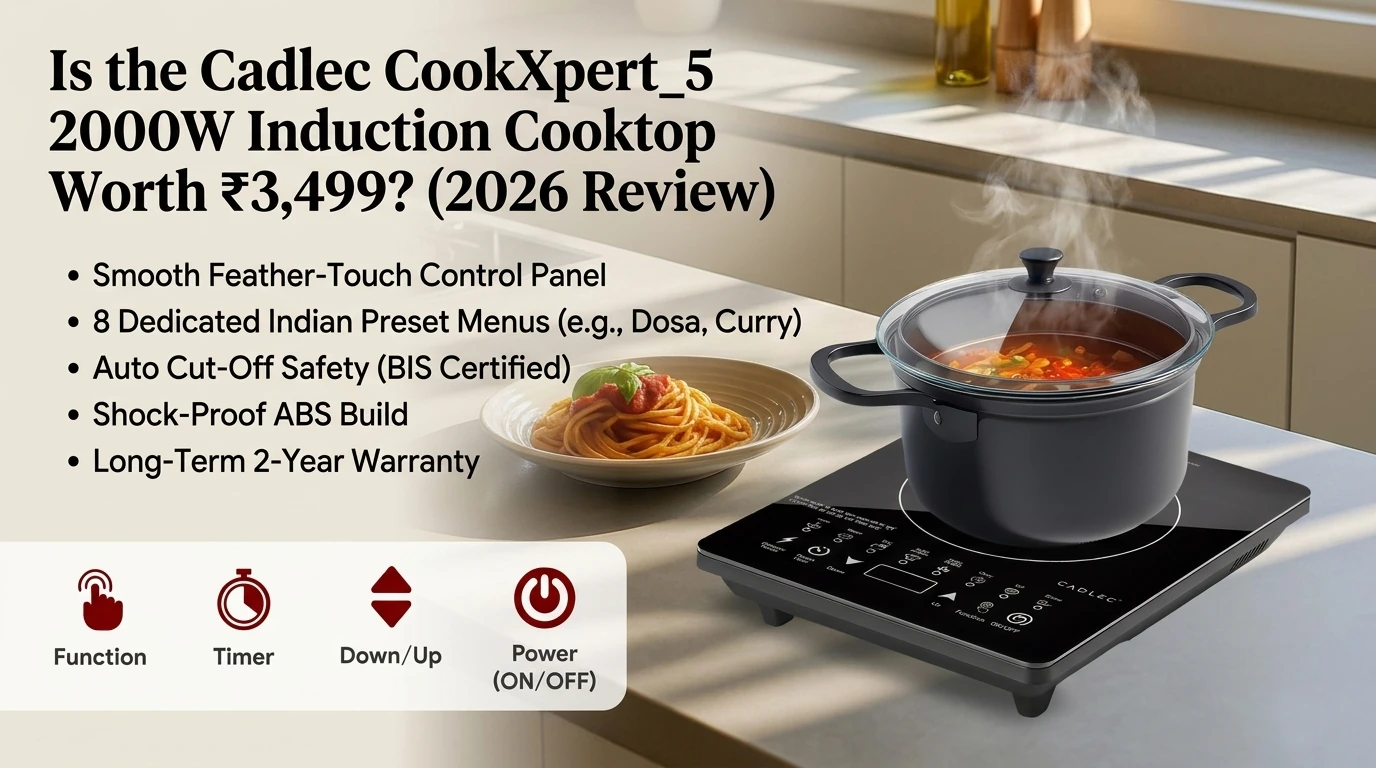
The Cadlec CookXpert_5 promises high-speed 2000W performance and dedicated Indian presets for perfect dosas and chapatis. But at its current Amazon pricing, is it a smart buy? Dive into our comprehensive Gas Care review to explore its safety features, 2-year warranty, and the exact discount price you should actually wait for.
Top 5 High-Wattage Induction Stoves (2000W+) for Fast Indian Cooking
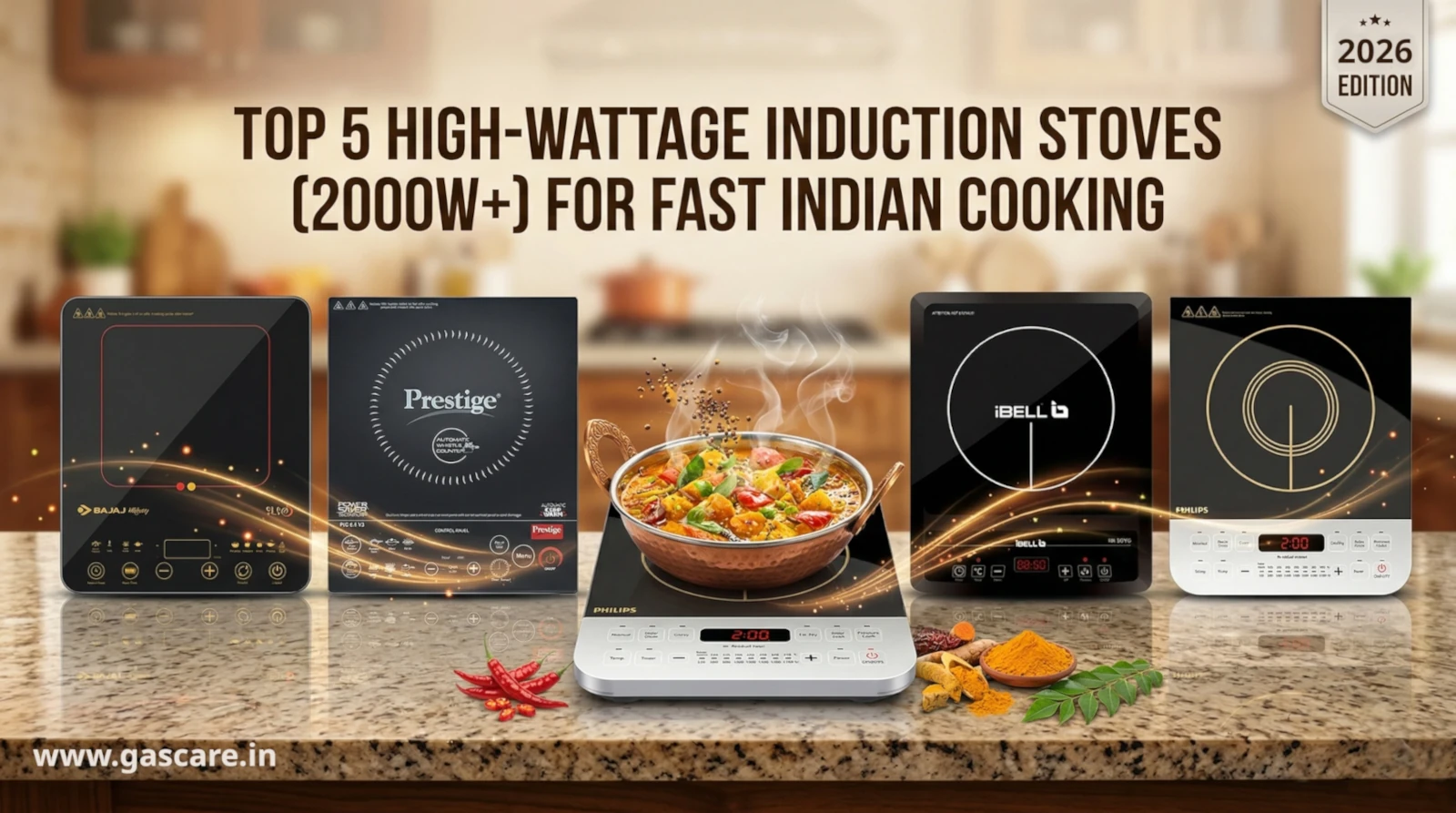
Struggling to deep-fry or pressure-cook on a basic 1200W electric stove? Discover the top 5 high-wattage (2000W+) induction cooktops in India for 2026. Get genuine gas-like speed with our expert reviews of heavy-duty models from Prestige, Philips, Bajaj, and more. Stop waiting and start cooking!
Best Budget Induction Cooktops Under ₹2,000: Tested & Reviewed
Stop wasting money on expensive LPG cylinders for simple boiling tasks. We tested and reviewed the top induction cooktops under ₹2,000 to help you find the perfect, budget-friendly addition to your kitchen.
The 2026 Engineering Audit: Electrolux UltimateTaste 500 Built-in Induction Hob Review
Tired of slow gas heating and cramped cooking zones? The Electrolux UltimateTaste 500 (EHI3251BE) features a Bridge Function to combine zones for massive pans. Read our complete engineering and installation audit.
Prestige PIC 6.1 V3 2200W Induction Review: The Automated Whistle-Counting Powerhouse
Panasonic KY-A112AKFD Review (2026): The 60kg Heavy-Duty Induction Cooktop
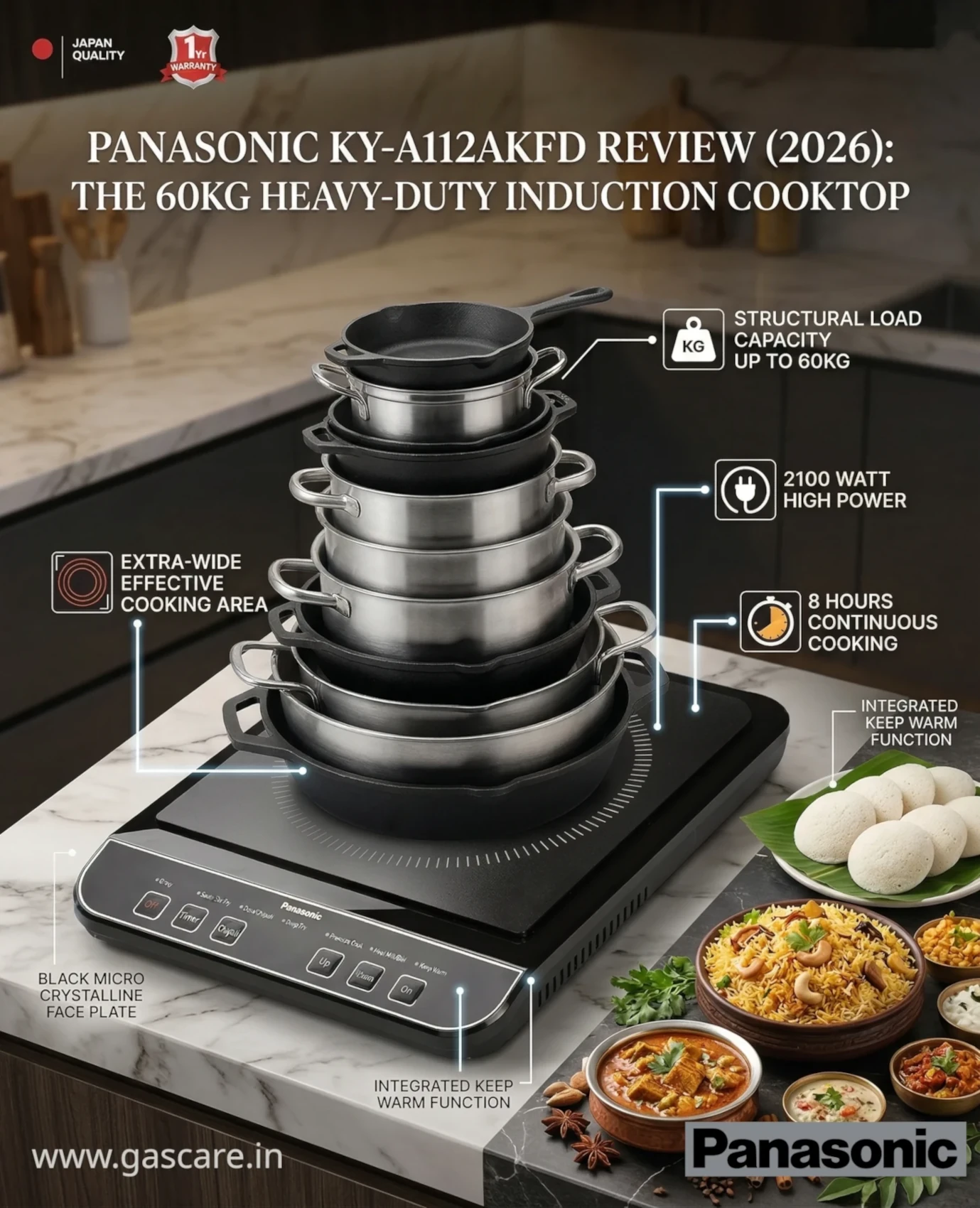
Tired of fragile glass cooktops cracking under heavy Indian cookware? Read our deep-dive review of the Panasonic KY-A112AKFD. With a staggering 60kg weight capacity, an 8-hour continuous timer, and a 2100W wide heating coil, discover why this is the ultimate electric workhorse for large joint families, cloud kitchens, and catering setups.
The 2026 Engineering Audit: Electrolux Series 300 Induction Hob Review
Introduction At the Gas Care by Stove-Technica testing facility in Thrissur, we are witnessing a rapid shift in premium modular kitchen design. While traditional gas hobs dominate, high-end consumers are increasingly pivoting toward pure electric induction built-ins to eliminate ambient heat and open-flame hazards. The Electrolux Series 300 Induction Hob (EIB60424CK) arrives on the…
Bosch: Today’s Top Deals

Bosch TrueSafe 2100W UltraSleek Induction Cooktop |Touch Panel (PI815S11EI)

Bosch Built in Gas Hob Black Tempered glass Glass 3 Burner Auto Ignition 75 cm Full Brass 3D Ring Burners with Matt Black Heat Shields & Cast Iron…

Bosch Cripsmaxx Air Fryer 4L, With Touch Panel, Smart Integrated System, With Adjustable Grid With 6 Preset+ Preheat And Keep Warm Function,…

Bosch Oil Free Deep Fryer Series 6, MAF671B0, Air Fryer XXL, 7.2L Capacity, 7 Preset Programs, Illuminated Cooking Pane, Up to 65% Faster, Black

Bosch Pib375Fb1E, 30 Cm, Built In Induction Hob Ceramic Glass 2 Cooking Zones – Black

Bosch Built in Gas Hob Black Tempered glass Glass 3 Burner Auto Ignition 75 cm True Brass 2D Ring Burners with Glossy Black Heat Shields & Enameld…

Bosch Built in Gas Hob Black Tempered glass Glass 4 Burner Auto Ignition 60 cm True Brass 2D Ring Burners with Matt Black Heat Shields & Cast Iron…

Bosch Built in Gas Hob Black Tempered glass Glass 4 Burner Auto Ignition 60 cm True Brass 2D Ring Burners with Glossy Black Heat Shields & Enameld…

Bosch Built in Gas Hob Black Tempered glass Glass 3 Burner Auto Ignition 75 cm True Brass 2D Ring Burners with Matt Black Heat Shields & Cast Iron…

Bosch Built in Gas Hob Black Tempered glass Glass 4 Burner Auto Ignition 90 cm True Brass 2D Ring Burners with Glossy Black Heat Shields & Enameld…


Bosch Built in Gas Hob Black Tempered glass Glass 5 Burner Auto Ignition 90 cm True Brass 2D Ring Burners with Glossy Black Heat Shields & Enameld…

Bosch Built in Gas Hob Black Tempered glass Glass 4 Burner Auto Ignition 75 cm Italian Double Ring Burners (PNI7B6B10I)

Bosch Built in Gas Hob Black Tempered glass Glass 4 Burner Auto Ignition 90 cm Full Brass 3D Ring Burners with Matt Black Heat Shields & Cast Iron…

Bosch Built in Gas Hob Black Tempered glass Glass 5 Burner Auto Ignition 90 cm True Brass 2D Ring Burners with Matt Black Heat Shields & Cast Iron…

Bosch Built in Gas Hob Black Tempered glass Glass 4 Burner Auto Ignition 75 cm True Brass 2D Ring Burners with Matt Black Heat Shields & Cast Iron…

Bosch Built in Gas Hob Black Tempered glass Glass 4 Burner Auto Ignition 90 cm True Brass 2D Ring Burners with Matt Black Heat Shields & Cast Iron…

Bosch Built in Gas Hob Black Tempered glass Glass 4 Burner Auto Ignition 75 cm Full Brass 3D Ring Burners with Matt Black Heat Shields & Cast Iron…

Bosch Built in Gas Hob Black Tempered glass Glass 3 Burner Auto Ignition 60 cm True Brass 2D Ring Burners with Glossy Black Heat Shields & Enameld…

Bosch Pie651Bb1E,60Cm 4 Zone Ind Glass Ceramic Hob, Black

Bosch Serie | 4 Gas hob 60 cm Tempered Glass 3 Burner Gas Hob PNC6B6B10I